
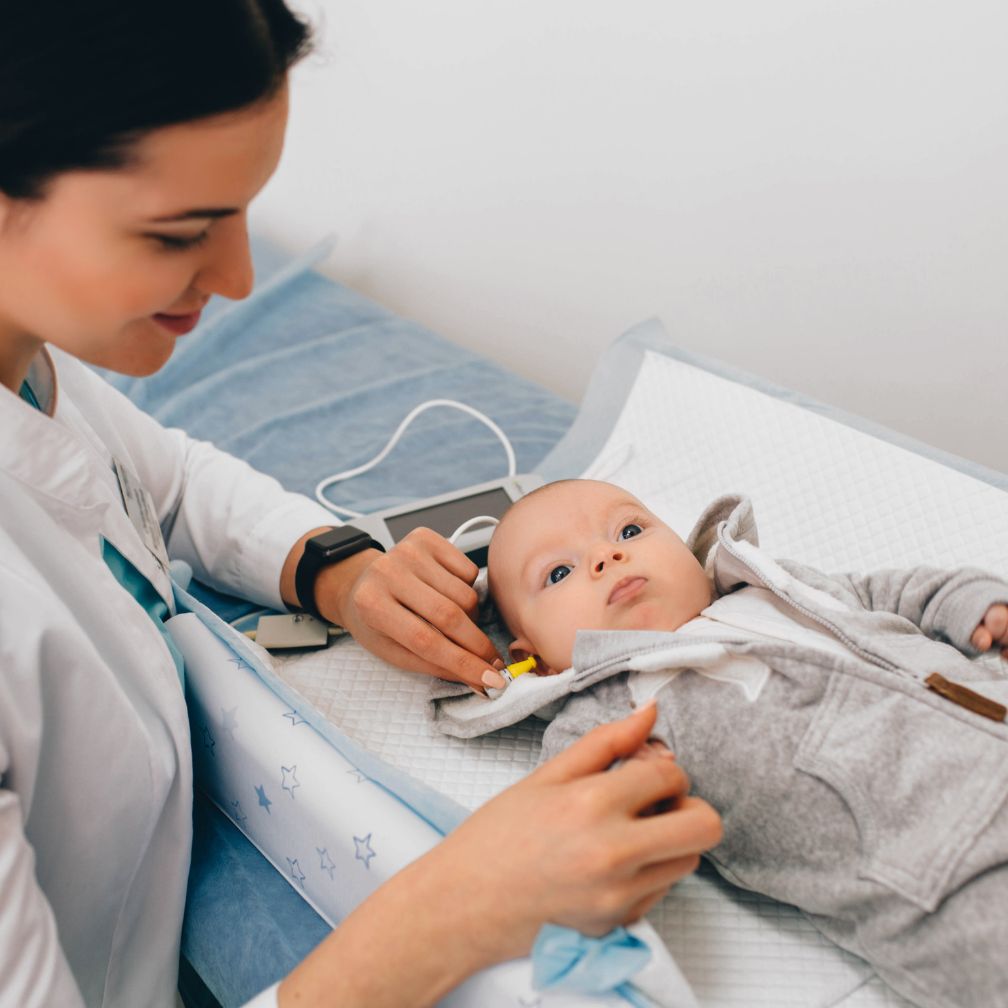
For guardians of newborns, learning that a child presents a hearing difficulty rapidly creates overwhelming emotional strain. Yet the optimistic truth is that via rapid screening and support, young children facing auditory deficits can realize great success. Indeed, these babies regularly develop speech capabilities, relational skills, and strong connections across their social sphere, guaranteeing a prosperous life!
Combining traditional hearing devices with specialized cochlear technology delivers two outstanding solutions for supporting infants who exhibit hearing loss. Below, we take a look at how they work and how to know which option is right for your child.
Unpacking the Foundations of Infant Hearing Loss
Hearing impairment in newborn infants can stem from various underlying sources, including:
- Spontaneous genetic mutations (even in families with zero background of impairment)
- Documented prenatal viral exposures including cytomegalovirus (CMV) or rubella pathogens
- Complex obstetric complications, such as systemic oxygen lack or early gestational delivery
- Particular ototoxic pharmaceuticals utilized in dedicated newborn intensive units
The most important step? Prompt clinical identification. For this reason, infants throughout the United States complete systematic hearing checks before leaving the hospital. Certified pediatric audiology experts faithfully maintain the official “1-3-6” operational timeline:
- Baseline screening performed within the first month
- Official diagnostic verdict secured within 3 months
- Comprehensive management (employing modern technology or rehabilitation) initiated prior to 6 months
Meeting these core timeline goals grants infants their best chance at healthy speech, verbal communication, and brain development. Whenever you seek direction on these auditory tests, your pediatrician remains eager to support you!
Hearing Aids for Infants
When treating infants affected by mild to severe hearing loss, prescription hearing aids generally function as the premier solution. These small, custom-fit devices increase acoustic volume, helping infants distinguish human speech and natural sounds more clearly.
Current pediatric hearing aids function as:
- Structurally and medically safe for infants aged just a few weeks
- Manufactured with cushioned, ergonomic ear molds that adapt as the infant matures
- Outfitted with tamper-proof battery doors and child-focused protective mechanisms
- Expertly tuned by a certified pediatric audiologist to accommodate your child’s specific hearing levels
While your infant develops, hearing devices require routine recalibration to ensure proper fit and effectiveness.
Cochlear Implant Options for Newborns
If a baby exhibits profound sensorineural hearing loss and receives minimal help from conventional hearing aids, a cochlear device can be prescribed. Unlike standard acoustic hearing devices, cochlear implants:
- Are positioned within the inner ear through a surgical process to directly stimulate the auditory nerve
- Direct sound past non-working areas across the inner ear system
- Convert surrounding audio into precise electrical signals that directly activate the auditory nerve
Specialized pediatric cochlear implants act as:
- Fully FDA-approved for pediatric candidates beginning around 9 to 12 months
- Most successful when paired with early habilitation programs and dedicated family support
- Recommended solely following exhaustive clinical evaluations by a certified audiologist and otolaryngologist
This diagnostic phase features radiological imaging, comprehensive audiometric testing, and setting realistic expectations for future communicative success.
Contrasting Hearing Aids with Cochlear Implants
- Mild to severe hearing loss relies on Hearing Aids; Severe to profound hearing impairment calls for Cochlear Implants
- Non-Invasive: Hearing Aids; Invasive surgical procedure: Cochlear Implants
- Traditional acoustic amplification: Hearing Aids; Direct conversion to electrical signals: Cochlear Implants
- Fitting starts at early infancy: Hearing Aids; Implantation starts at 9-12 months: Cochlear Implants
Concluding Guidance on Pediatric Hearing Technology
When your child is diagnosed with auditory deficits, rest assured that clear options and compassionate guidance. With active assistance from pediatric hearing professionals, many young children achieve speech and language milestones fully matching their playmates.
No matter if your infant proves better suited for conventional hearing aids or advanced cochlear implants, acting swiftly establishes a foundation for lifelong communicative success.
Do you still have lingering questions regarding your infant’s auditory condition? Contact our staff today for a complete diagnostic review and tailor-made care roadmap.